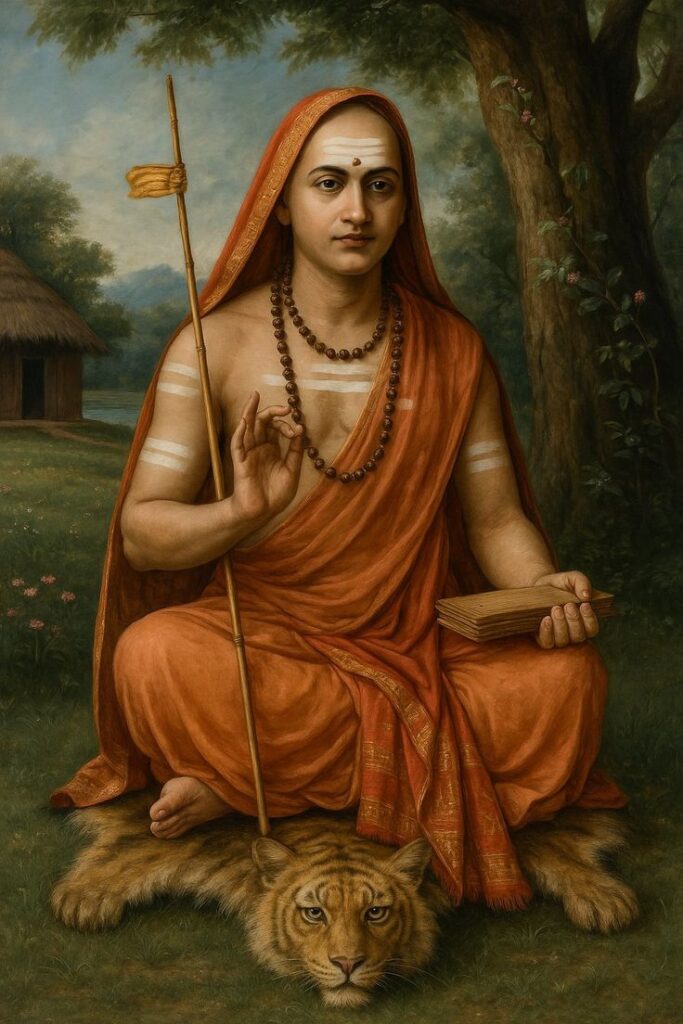
The protector and restorer of the Hindu dharma, the introducer of Panchayatana (simultaneous worship of 5 deities) and founder of Dasanami Sampradaya (order of swamis), best known for his reviews or commentaries on ancient Indian texts, and most famous for his philosophy of Advaita Vedanta – Adi Shankaracharya. Sadhguru calls him a spiritual light and the pride of India. Let’s get to know him more, through this biography.
Life and Work of Adi Shankaracharya
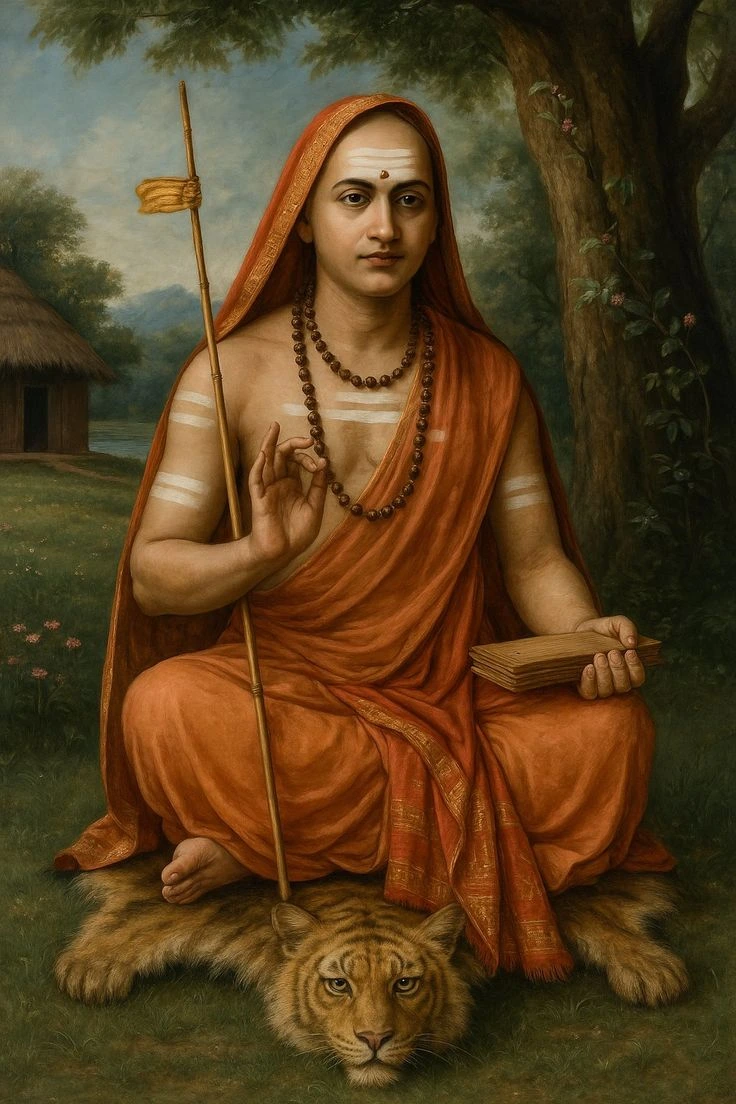
Adi Shankara, as he was referred to, was born in 700 CE, though arguably so, as modern scholars assign him this span but scholars of the earlier generations say that he belonged to the period between 788 and 820 CE while the cardinal Advaita Mathas place him between 509 and 477 BCE.
His name literally means the first Shankaracharya and he was an Indian Vedic scholar and teacher of the Advaita Vedanta. He is believed to have re-established the Hindu dharma from the attacks of Buddhists and Jains and helped to remove Buddhism from India. It is also said that by introducing Panchayatana or Pancha Devi Deva Puja (a form of simultaneously worshipping 5 deities Ganesha, Surya, Vishnu, Shiva and Devi), he united various sects like Vaishnavism, Shaivism and Saktism.
Hagiographies from the 14th century to 17th century depict him as someone who travelled across India in the effort to restore Vedic studies. His teachings are based on Smartism or Smarta tradition. He believed that all deities were different forms of one Brahman, the invisible supreme being.
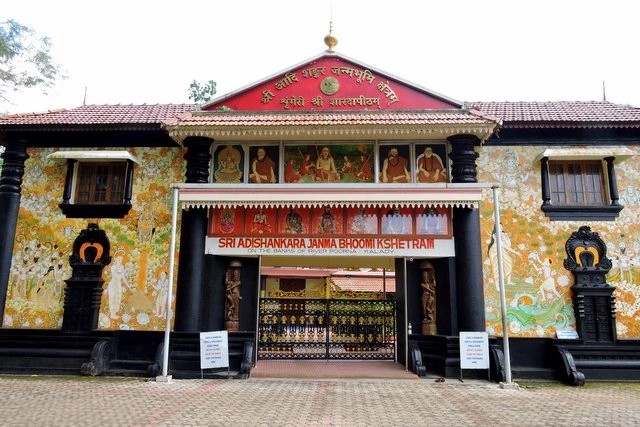
According to the earliest hagiographies, Shankara was born in a village Kaladi in Kerala, in a Nambudiri Brahmin family. His parents were old and they used to serve the poor. They named him Shankara, which means ‘the giver of prosperity’. His father died when he was very young, and his upanayanam was performed by his mother. It is said that Shankara was drawn to hermit-life since childhood. According to a legend, once when he had gone with his mother to a river for bathing, he was caught by a crocodile. He asked his mother for permission to be a sannyasin and said that if she allows, the crocodile would release him. His mother quickly permitted, after which he left his house for education. He was aged only 8 that time.
Shankara reached a Saivite sanctuary along a river in north-central India and accepted Govinda Bhagavatpada as his guru. According to some hagiographies, Shankara’s schooling took place along river Narmada, some hagiographies state Varanasi as his place of schooling, while some sources state that he took education in Badrinath. He learned the Vedas, Upanishads and Brahmasutra from Govindapada. He also learned Gaudapadiya Karika with him. It is believed that Shankara also met many scholars and Buddhists during this time, and he wrote many notable works during youth.
Hagiographies state that Shankara travelled a lot, took part in debates, went on pilgrimages, installed yantras and lingas, and founded monastic centres in various parts of India mainly in Gujarat and Bengal. He inspired the establishment of many Sannyasin schools which gave rise to about ten monastic orders. Four of them have continued in his tradition. They are Bharati (Sringeri), Sarasvati (Kanchi), Tirtha and Asramin (Dvaraka).
Shankara got many disciples during his travels. Some of them are Padmapadacharya (also called Sanandana), Sureshvaracharya, Totakacharya, Chitsukha, Bodhendra, Sadananda among others, who wrote about Shankara and Advaita Vedanta.
Hagiographies of the 14th century and later describe Shankara as the founder of Dasanami Sampradaya, which means he organized Hindu monks of 10 sects under 4 mathas (monasteries) with headquarters in Dwarka, Jagannath Puri, Sringeri and Badrikashrama, and each matha was led by one of his disciples.
As per some prominent hagiographies, Adi Shankara died at Kedarnath in Uttarakhand, India. It is said that his students saw him behind the Kedarnath temple walking in the Himalayas, and after a point he could not be traced. Some texts say that Shankara died in Kanchipuram.
Strangely, Shankara was unknown during his lifetime and for centuries after his demise, and he has neither been mentioned in Buddhist or Jain texts nor he has been written about by any of the 9th and 10th century philosophers.
Mandana Misra, a Mimansa scholar and follower of Kumarila, was believed to be the main representative of Advaita. His written work Brahma Siddhi was known in the modern times and he overshadowed Adi Shankara. Mandana Misra’s disciple Vachaspati Misra, said to be an incarnation of Shankara, authored Bhamati, a work that reviews Brahma Sutra Bhashya written by Shankara. As per Bhamati, Jiva is the source of Advaita, and yogic practice and contemplation are crucial for the attainment of liberation, and Vedic studies and reflection help in the process.
As per Hajime Nakamura, an academic of Vedic, Hindu and Buddhist scriptures, till the 11th century, Vedanta was limited to a small group of intellectuals and only after Shankara, theologians of different sects of Hinduism used Vedanta philosophy as the basis of their doctrines and it thereon influenced Indian society at large. The main theme of Shankara’s writing is the knowledge of jivatman (individual self).
Shankara wanted to establish Upanishads as an independent source of knowledge. He aimed to explain how moksha can be achieved by recognizing the real identity of jivatman as Atman-Brahman. Shankara said that the purity and steadiness of mind attained through yoga helps gain the knowledge of moksha. Shankara’s teachings emphasize on withdrawing the mind from sense objects, but not practicing thought suppression, and rather withdrawing the mind from the particular and identification with the universal, leading to contemplation of oneself as the Consciousness. According to Shankara, Atman and Brahman, at the highest level of reality, are identical.
Many biographies of Shankara were written and published in and after the 14th century. One famous biographical work Sankara Vijaya was authored by Madhava Vidyaranya, the 12th Jagadguru of the Sringeri Sarada Pitham. He created stories to turn Shankara into a divine folk hero. He popularized Shankara’s teachings and regarded them as the most inclusive. He established a matha, and claimed that it was established by Shankara himself. He garnered help from the royals and his sponsorship and efforts resulted in further increasing the popularity of Shankara.
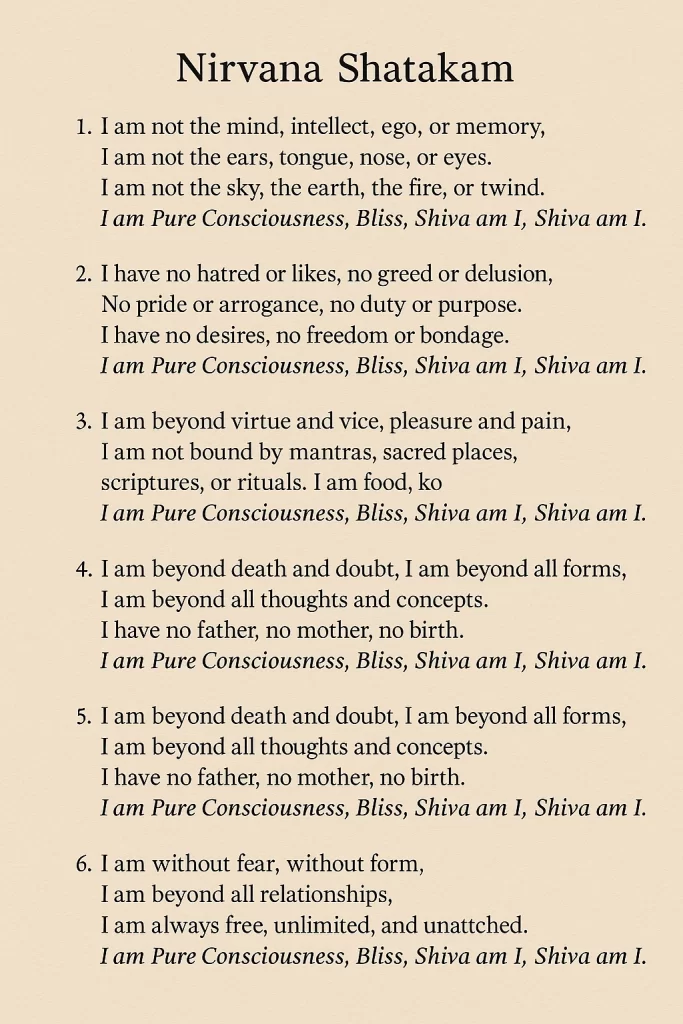
More on Nirvana Shatakam Mantra – Origin, Sanskrit & English Lyrics, Meaning and Benefits
In the 19th and 20th century, when Neo-Vedantins and western Orientalists said that Advaita Vedanta united Hinduism into a single religious tradition, Adi Shankara gained greater importance. In 2019, a 12-foot status of Adi Shankara was unveiled in Kedarnath. In September 2023, a 108-feet statue of Shankara was unveiled near Omkareshwar Temple in Madhya Pradesh.
There are 14 different hagiographies of Adi Shankara’s life. They have been written at different times between centuries to almost thousand years after Shankara’s death, and in Sanskrit as well as other languages. They have differing accounts of Shankara’s life and there is authentic information about him is meagre. However, Shankara’s life, work and wisdom have intrigued scholars since centuries and he is widely known as the ideal sannyasi who founded the nondualist Advaita Vedanta school. In the words of Sadhguru, Adi Shankara was a shining spiritual light who illuminated the land of Bharat with teachings that are impactful even today.